If you’re running a fleet of buses, you know YUTONG is the name that comes up over and over again. Whether you’re a small private charter company, a transit district handling local routes, or a tour operator taking groups cross-country, keeping those YUTONG units on the road means one non-negotiable: parts. And let’s be real—one of the first questions people hit me up with is, “How much do YUTONG parts actually cost?” As a supplier who’s been in this game for a minute, I don’t give you a generic number and ghost. Let’s break this down like we’re grabbing coffee and geeking out over what makes a YUTONG tick, no fancy jargon, no bait-and-switch. YUTONG Parts
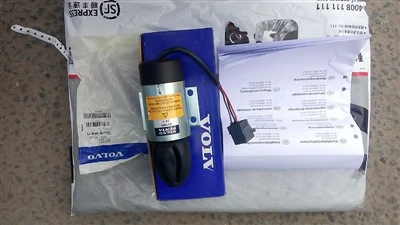
First off, I should set the scene: I don’t sell cheap knockoffs. I sell authentic YUTONG original equipment manufacturer (OEM) parts, and that’s why the prices aren’t just random. A lot of folks hit up Facebook or random marketplaces looking for a $20 brake pad, only to find it falls apart on the first mountain pass. That’s not a deal—that’s a headache. For context, the price of YUTONG parts swings based on three big things: the type of part, the age and model of your bus, and how fast you need it. Let’s start with the most common stuff people ask about, because that’s where most folks start their repair journey.
Let’s talk wear-and-tear parts first—these are the ones you replace every 10k to 50k miles, so most folks have a feel for the ballpark. Brakes are non-negotiable, right? A set of YUTONG front brake pads for a 2018 ZK6127 (super common mid-size coach) runs around $120 to $150 a set. Rear pads are a little less, usually $90 to $110. If you need rotors, that’s another $180 to $220 per rotor. Yeah, that adds up, but those rotors are cast to YUTONG’s specs—no warping after a long day of stop-and-go downtown or winding mountain roads. If you go aftermarket, you might save $30, but I’ve seen guys swap those three times in a year because they can’t handle the heat. Not worth it when you’re ferrying passengers.
Next up, filters. Oil filters, cabin air filters, fuel filters—every 5k to 10k miles. YUTONG OEM oil filters for a 2020 ZK6119 transit bus? Around $25 to $30. Cabin air filters, which keep your drivers and passengers from breathing dust or fumes, are $35 to $45. A lot of folks cut corners on cabin filters, especially for charter buses that might have 50 people crammed in all day. Guess what? Clogged filters make the AC work way harder, which burns more fuel. That $40 filter saves you hundreds in fuel costs over a year. I’ve seen too many fleets skip that and end up with a $1,000 AC repair—talk about a false economy.
Then there are the electrical and under-the-hood parts, which are where prices jump a little. Alternators, for example. A YUTONG alternator for a ZK6122 (full-size coach) is around $450 to $550. If you wait until yours dies mid-trip, you’ll pay way more for rush shipping, trust me. Batteries are another big one. A 12V heavy-duty battery for a YUTONG transit bus runs $220 to $280. Cheap off-brand batteries are $150, but I’ve had customers come back within six months because they can’t handle the constant idling that transit buses do. My OEM batteries come with a 12-month warranty, so you’re not out $150 every spring when it’s time to swap.
Now, let’s get to the tricky stuff: hard-to-source parts for older YUTONG models. A lot of fleets have buses that are 10, 15, even 20 years old—those are the workhorses that don’t get retired easy. Let’s say you’ve got a 2010 ZK6108 and you need a fuel injector. Those are around $280 to $320 each, which might seem steep, but you can’t just run to a auto parts store for a generic one. YUTONG’s engine specs change year over year, and that 2010 injector is calibrated just right for that model’s fuel system. If you get a generic one, you’ll get bad gas mileage, maybe even rough idling that’ll make your driver pull their hair out. For older models, prices also go up because we have to source directly from YUTONG’s original factories—no middlemen cutting corners on quality.
I should also mention how location and shipping affect the price. If you’re local, you can pick up parts same-day, no shipping cost. If you’re across the country, standard ground is $30 to $50, rush is $80 to $100. A lot of guys wait until their bus is broken down to order parts, so they end up paying rush shipping and a premium. I always tell folks: stock your most common wear parts (pads, filters, belts, hoses) in your shop. That $50 to $100 you spend stocking up saves you $200 in towing and downtime when a bus breaks down on the road. I’ve had a customer once who had a charter bus break down 200 miles from home—they paid $1,200 in towing just to get it back. They learned fast, now they keep a full set of parts on hand.
Wait, what about things that aren’t wear parts—like body panels or glass? That’s where prices get more variable. A YUTONG front windshield for a 2022 ZK6137 is around $1,100 to $1,300. Side window panels are around $350 to $450 each. If you get an aftermarket windshield, it might be $700, but it won’t fit right—you’ll get leaks, or the wipers won’t seat properly, which is a safety hazard. I’ve seen that happen: a fleet replaced a windshield with a cheap one, and on a rainy highway, water seeped into the wiring and shorted out the dash. Total repair? $2,500. Way more than the $400 they saved upfront.
Now, let’s cut through the noise: why my prices aren’t the cheapest, but they’re the most reliable. A lot of suppliers will post parts for $50 less, but those are often “core” parts—meaning you have to send them your old part back to get the discount. Or they’re refurbished, not brand new. I sell brand new, genuine YUTONG OEM parts, no core exchange required, and that shows in the warranty. Most parts I sell come with a 12-month or 12,000-mile warranty, whichever comes first. The cheap stuff? Usually a 30-day warranty, if that. I’ve had customers tell me they bought a $100 brake pad set from a random site, and three months later, they were worn out. They ended up paying $250 total for two sets, plus labor to swap them. That’s way more than just buying the good set first.
I also want to talk about bulk pricing, because a lot of fleet managers don’t know about this. If you’re a small fleet with 5 buses, or a big transit district with 50, I can cut you a deal if you order in volume. For example, if you order 4 sets of brake pads for your whole fleet, that’s 10% off. 10 sets? 15% off. It adds up quick, and I make it work because I know keeping your fleet moving is more important than marking up parts just because I can. I’ve been doing this for 12 years now, and most of my clients have been with me for years—because I don’t nickel and dime them, and I’m honest about what they actually need, not what I can sell them.
Let’s be clear: there’s no single “YUTONG parts cost” answer. It’s not a $5 number or a $500 number. It depends on what part you need, what model your bus is, whether you’re ordering new or refurbished, how fast you need it, and how much you order. But here’s the rule of thumb I tell every new client: if a deal sounds too good to be true, it is. I’ve seen too many guys save $20 on a part and end up with a bus out of commission for a week. That’s way worse than paying $20 extra for a part that’s going to last.
If you’re out there right now, staring at a broken bus, or planning your next maintenance run, and you’re tired of guessing what YUTONG parts actually cost—hit me up. I don’t do generic quotes. I’ll ask you what model your bus is, what part you need, how soon you need it, and give you a straight number, no hidden fees, no fine print. I’ll even tell you if you can hold off on a part if it’s not urgent, or if stocking up on wear parts will save you money in the long run. I’ve got years of experience working with all types of YUTONG buses, from the tiny cutaways to the big cross-country coaches, and I’m not here to sell you something you don’t need.

Don’t waste time scrolling sketchy marketplaces where you might get a knockoff that falls apart. Reach out to me, ask questions, get a real, transparent price. Your fleet is your business—keeping those buses on the road is how you make money, and the right parts are the foundation of that. Let’s make this easy, no stress, no hidden costs. Let’s talk.
SINOTRUK SITRAK parts References:
- YUTONG Genuine Parts Catalog, 2024
- National Truck and Bus Association Maintenance Cost Guide, 2023
- Fleet Equipment Magazine, Bus Part Reliability Study, 2022
Jinan Hong’an Machinery Parts Co., Ltd.
As one of the most professional yutong parts manufacturers and suppliers in China, we offer a wide range of products with superior quality. With abundant experience, we warmly welcome you to buy high quality yutong parts for sale here from our factory. For price consultation, contact us.
Address: Quanli Heavy Truck Parts City, No. 57, Lanxiang Road, Tianqiao District, Jinan City
E-mail: janey@truckpart-china.com
WebSite: https://www.truckpart-china.com/
