Hey there! I’m a supplier of chemical air filters, and I often get asked about the efficiency rating of these filters. So, I thought I’d take some time to break it down for you in simple terms. Chemical Air Filter
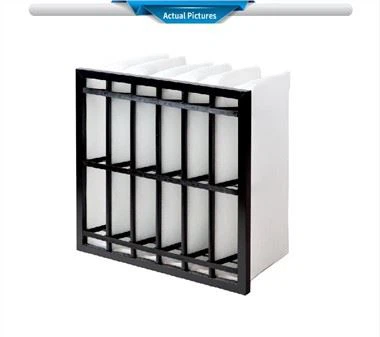
Let’s start with the basics. A chemical air filter is designed to remove specific contaminants from the air by using a chemical reaction or adsorption process. These filters are commonly used in industrial settings, laboratories, and even in some high – end residential air purification systems. The efficiency rating of a chemical air filter tells you how well it can remove those targeted contaminants.
Understanding the Key Metrics
One of the most important things to look at when it comes to efficiency is the Minimum Efficiency Reporting Value, or MERV. But hold on, MERV is more commonly associated with mechanical (particle – based) air filters rather than chemical ones. For chemical air filters, we focus on other metrics like Adsorption Capacity and Breakthrough Time.
Adsorption Capacity
Adsorption capacity is all about how much of a particular contaminant the filter can hold before it starts to lose its effectiveness. Think of it like a sponge. A sponge can only soak up so much water, right? Well, a chemical air filter can only adsorb so much of a contaminant.
Let me give you an example. If we’re talking about a filter designed to remove formaldehyde from the air, the adsorption capacity will tell us how many grams of formaldehyde the filter can hold. The higher the adsorption capacity, the longer the filter will last before it needs to be replaced.
We test the adsorption capacity in our lab using specialized equipment. We expose the filter to a known concentration of the target contaminant for a set period. Then, we measure how much of the contaminant has been adsorbed. This gives us a pretty accurate picture of how well the filter will perform in real – world scenarios.
Breakthrough Time
Breakthrough time is another crucial metric. It refers to the amount of time it takes for the concentration of the contaminant at the outlet of the filter to reach a certain percentage (usually 10%) of the concentration at the inlet. In simpler terms, it’s the time when the filter starts to "leak" the contaminant.
Let’s say we have a filter installed in a room where there’s a constant source of ammonia. We measure the ammonia levels at the inlet and the outlet of the filter. As the filter works, it adsorbs the ammonia. But after a while, the filter gets saturated, and ammonia starts to come out through the outlet. The moment the ammonia concentration at the outlet reaches 10% of the inlet concentration, that’s the breakthrough time.
A longer breakthrough time means the filter is more efficient. It can protect the air in the environment for a longer period before needing replacement.
Factors Affecting Efficiency
There are several factors that can affect the efficiency rating of a chemical air filter.
Contaminant Concentration
The higher the concentration of the contaminant in the air, the faster the filter will get saturated. If you’re using a filter in an environment where there’s a large amount of a particular chemical, the adsorption capacity will be used up more quickly, and the breakthrough time will be shorter.
For example, in a factory where they’re constantly producing large amounts of benzene, the chemical air filter will have to work much harder compared to a situation where benzene is present in trace amounts.
Temperature and Humidity
Temperature and humidity can also have a big impact on the efficiency of chemical air filters. High temperatures can sometimes cause the adsorbed contaminants to be released back into the air. And high humidity can reduce the adsorption capacity of some filters.
This is because moisture in the air can compete with the target contaminants for the adsorption sites on the filter. So, if you’re using a filter in a hot and humid environment, you might need to change it more frequently.
Flow Rate
The flow rate of the air passing through the filter matters too. If the air is flowing too quickly, the filter might not have enough time to adsorb the contaminants effectively. On the other hand, if the flow rate is too slow, it may not be able to clean the air in a timely manner.
We usually recommend a specific flow rate for our filters based on the design and the intended application. If you deviate too much from this recommended flow rate, it can definitely affect the efficiency of the filter.
Why Efficiency Rating Matters
Understanding the efficiency rating of a chemical air filter is super important for a few reasons.
First of all, it helps you choose the right filter for your needs. If you’re in an industrial setting with high – level chemical contamination, you’ll need a filter with a high adsorption capacity and a long breakthrough time. But if you’re using it in a less polluted environment, you might be able to get away with a less powerful filter.
Secondly, it can save you money in the long run. By knowing the efficiency rating, you can estimate how often you’ll need to replace the filter. This helps you plan your maintenance budget more effectively. If you choose a filter with a low efficiency rating, you’ll end up replacing it more often, which can be costly.
Finally, it’s crucial for the health and safety of the people in the environment. A highly efficient chemical air filter can remove harmful contaminants from the air, reducing the risk of respiratory problems, allergies, and other health issues.
How We Test Our Filters
At our company, we take testing very seriously. We use state – of – the – art equipment to measure the adsorption capacity and breakthrough time of our filters.
We start by creating a controlled environment in our lab. We can simulate different levels of contamination, temperature, and humidity to see how the filters perform under various conditions.
We expose the filters to the target contaminants for a set period and continuously monitor the inlet and outlet concentrations. This allows us to accurately calculate the adsorption capacity and breakthrough time.
We also test the filters over a long period to ensure their long – term performance. We make sure that our filters meet or exceed industry standards.
How to Choose the Right Filter for You
When you’re looking for a chemical air filter, here are some tips to help you choose the right one based on the efficiency rating:
- Identify the Contaminants: First, figure out what contaminants you need to remove from the air. Different filters are designed to target different chemicals.
- Assess the Contaminant Level: Determine how much of the contaminant is present in the environment. This will help you decide if you need a filter with a high adsorption capacity.
- Consider the Environment: Take into account the temperature, humidity, and air flow rate in the area where you’ll be using the filter. This can help you choose a filter that can withstand those conditions.
Contact Us for More Information

If you’re in the market for a chemical air filter and have questions about efficiency ratings or which filter is right for you, don’t hesitate to reach out. We’re here to help you make the best decision for your specific needs. Whether it’s for an industrial plant, a laboratory, or your home, we’ve got the knowledge and the products to keep your air clean.
Fiberglass Mini Pleat Medium Filter Just drop us an email or give us a call, and our team of experts will be more than happy to assist you. Let’s work together to create a cleaner and healthier environment!
References
- "Air Filtration: An Integrated Approach to the Theory and Applications of Fibrous Filters" by Raoul B. Boulet and Stanley K. Friedlander
- "Handbook of Air Pollution Prevention and Control" edited by Neil C. Bruce, James C. Smith, and Kirk R. Smith
- Industry research reports on chemical air filtration technologies
Snyli Environmental Technology (Shandong) Co., Ltd.
Snyli Environmental Technology (Shandong) Co., Ltd. is well-known as one of the leading chemical air filter manufacturers and suppliers in China. Please feel free to wholesale high quality chemical air filter at competitive price from our factory. Contact us for more details.
Address: Room 907, Building 1, Qisheng Plaza, 1666 Xinluo Street, Jinan Area, China (Shandong) Pilot Free Trade Zone
E-mail: info@snyli.com
WebSite: https://www.snylifilter.com/
