If you’ve ever spent time in industrial settings, you know how crucial a refrigerated air dryer is. It keeps your compressed air system running smoothly by removing moisture—skip monitoring it, and you’re looking at rusted pipes, damaged equipment, and even finished products ruined by condensation. But here’s the thing: not everyone has the time (or the on-site team) to pop in every day and check the dryer’s gauges. That’s where remote monitoring comes in, and as a guy who’s been supplying refrigerated air dryers for over a decade, I’ve seen firsthand how this simple shift can save you a ton of headaches. Refrigerated Air Dryer
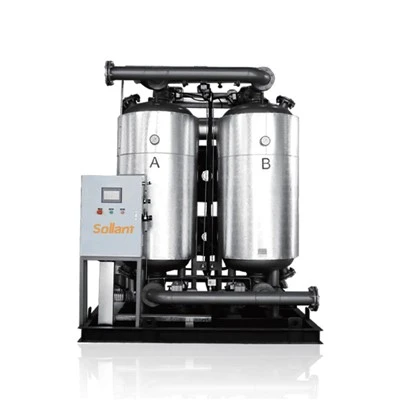
First, let’s get one thing straight: remote monitoring isn’t just for big factories. Even small to mid-sized operations can benefit. I’ve got customers with 3 dryers in a single plant, and others with 2 spread across two warehouses—no one wants to drive 45 minutes to check a gauge that blinks red for “failing” at 2 a.m. So let’s break this down like I’m explaining it to a friend who’s never touched a control panel. No jargon, just real stuff that works.
Start with the basics: what actually do you need to monitor on a refrigerated air dryer? You can’t just track one number and call it good. From my experience, the key metrics are things like inlet air temperature, outlet air temperature, pressure drop across the dryer, refrigerant pressure, and defrost cycle performance. Skip any of these, and you’ll miss a red flag. For example, if the outlet temp is too high, your dryer isn’t pulling enough moisture—meaning your compressed air is still wet, which can mess with paint lines, pneumatic tools, or food packaging. I had a customer a few years back who didn’t track this; their packaging line shut down for 3 days because wet air made labels peel off. Cost them thousands.
Now, how do you set up remote monitoring? The easiest way these days is with a retrofit sensor kit—no need to rip out your existing dryer (unless it’s super old, like pre-2010). When I supply a dryer, I always offer a compatible sensor bundle that plugs right into the unit’s existing ports. These aren’t those clunky, expensive things you see in old industrial docs; they’re small, weatherproof, and pair with a basic gateway that sends data to your phone or laptop. No fancy IT setup required—just plug the gateway into a power outlet, connect it to your Wi-Fi, and you’re done.
Wait, what if your dryer is older and doesn’t have ports? No problem. We also offer clip-on sensors that wrap around the pipes—you don’t need to cut any wires or mess with the dryer’s internals. I had a customer last year with a 15-year-old dryer; he was worried about voiding the warranty if he modified it, so we sent him a set of clip-on temp and pressure sensors. He installed them in 10 minutes flat, and it worked like a charm.
Once the sensors are set up, you need a dashboard to see all the data. I know, dashboards sound techy, but the ones we use with our kits are super simple. Think of it like a digital version of the gauge panel you already have, but accessible from anywhere. You can set custom alerts—like a text message if the outlet temp spikes above 38°F, or an email if the pressure drop gets too high. I’ve had customers set up alerts for after-hours, so if something goes wrong while they’re home watching TV, they get a notification instead of getting a 2 a.m. call from a maintenance guy.
But here’s where people mess up: they think remote monitoring is just “set it and forget it.” That’s not true. You need to actually check the dashboard regularly, even if you’re getting alerts. For example, if you get a defrost cycle alert, it might be a small issue—like a clogged air filter on the dryer’s fan—instead of a full compressor failure. Checking the dashboard a few times a week helps you spot trends, too. Over time, you’ll notice if the dryer’s inlet temp is creeping up in the summer, which might mean you need to clean the condenser coils. That’s a cheap fix if you catch it early, instead of a $2,000 compressor replacement when it breaks.
Another thing I’ve learned: remote monitoring works best when you tie it to your maintenance schedule. Let’s say your alert system tells you the pressure drop is slowly increasing. That’s a sign the air filter is dirty—no need to wait 6 months for your scheduled maintenance. You can swap it out now, before it causes bigger problems. I’ve seen customers extend their dryer’s lifespan by 3-4 years just by using remote monitoring to stay on top of small issues. That’s a huge savings when a new dryer costs $5k-$10k, depending on size.
Wait, let’s talk about common myths. Some guys say, “I’ve got a maintenance guy who checks the dryer every week, so I don’t need remote monitoring.” But what if the maintenance guy is out sick? Or the dryer is in a part of the plant that’s hard to get to, like a remote warehouse? Last year, a customer’s maintenance truck broke down on the way to check the dryer—they didn’t know the refrigerant had leaked until their air system pressure dropped. By then, they’d lost 2 hours of production. Remote monitoring would’ve caught the leak within minutes.
Others say, “Remote monitoring is too expensive.” Let’s do the math. A basic sensor kit costs a few hundred bucks, and the gateway is a one-time purchase. Compare that to the cost of unplanned downtime, or a new dryer, or replacing parts that could’ve been fixed early. I’ve never had a customer tell me their monitoring kit didn’t pay for itself in the first 3 months. It’s not about spending more—it about avoiding the big bills.
Now, a quick tip for when you’re setting up: make sure the sensors are installed correctly. For temp sensors, you want them tight to the pipe, not just sitting on top—air gaps give bad readings. For pressure sensors, install them in a straight part of the pipe, not near elbows or valves, because those can skew the numbers. I always send a simple instruction sheet with the kit, but if you mess it up, just shoot me a message—we’ll walk you through it over the phone. No tech support runaround, promise.
What about security? I know a lot of guys worry about connecting industrial equipment to Wi-Fi. That’s a valid concern, but the good sensor kits have built-in encryption—so your data is only going to your dashboard, not some random server. We test our kits to make sure they don’t leave your network vulnerable, so you don’t have to call your IT guy to rework your whole system. It’s a small piece of mind that’s worth it.
Let’s wrap this up with a real example. A customer of mine runs a small auto body shop with 2 refrigerated air dryers. He used to have a guy come in once a week to check the gauges—cost him $150 a visit, and he’d often have to reschedule if the guy was busy. Now, he has a remote monitoring system for each dryer. He gets a text if a filter is dirty, so he can swap it himself in 5 minutes. Last summer, his alert told him the inlet temp was too high—he cleaned the condenser coils, and the dryers kept running all summer, no issues. He saved over $2,000 in maintenance and downtime last year alone. That’s exactly what I’m talking about.
At the end of the day, remote monitoring isn’t a fancy luxury—it’s a way to take control of your refrigerated air dryer without having to be on-site 24/7. It’s simple, it saves money, and it takes the stress out of wondering if your dryer is working. If you’re thinking about setting this up, or if you need a new refrigerated air dryer that works with these monitoring kits, just reach out. We can walk you through the options, no pressure, no sales pitch. Just straight talk about what works for your operation.
Before you go, here’s a quick checklist to make sure you’re on track:
- Identify the key metrics to monitor (inlet/outlet temp, pressure drop, refrigerant pressure)
- Get the right sensors for your dryer (retrofit or clip-on)
- Set up alerts for abnormal readings
- Check your dashboard regularly to spot trends
- Tie the data to your maintenance schedule

Don’t wait for a breakdown to invest in remote monitoring. A little bit of setup now can save you a ton later. If you’re ready to get started, or have questions about which system is right for you, feel free to connect and talk through your needs. We’re here to help.
Filter and Separator Series References
- Compressed Air and Gas Institute (CAGI). “Guidelines for Refrigerated Air Dryer Monitoring and Maintenance,” 2022.
- Industrial Technology Research Institute (ITRI). “Remote Monitoring for Industrial Refrigeration Systems,” 2021.
- Plant Engineering Magazine. “Cutting Downtime with Proactive Dryer Monitoring,” 2023.
- ASHRAE. “Refrigerated Air Dryer Performance and Monitoring Best Practices,” 2022.
Shanghai Sollant Energy Saving Technology Co., Ltd.
As one of the most professional refrigerated air dryer manufacturers and suppliers in China, we’re featured by quality products and good service. We warmly welcome you to buy bulk advanced refrigerated air dryer from our factory. If you have any enquiry about cooperation, please feel free to email us.
Address: No.215, Songri Center, Beihongqiao, Jiading District, Shanghai, China
E-mail: info4@sollant.com
WebSite: https://www.sollanttreatment.com/
