If you’re reading this, odds are you’re either an operations manager at a manufacturing plant, a facilities lead at a strip mall or office complex, or someone who’s been hearing a lot about C&I ESS (that’s Commercial & Industrial Energy Storage Systems, for the uninitiated) lately and is wondering if they’re actually safe. I’m the guy who spends 40 hours a week troubleshooting, testing, and shipping these systems to places just like yours, so I’ve got real, on-the-ground takes, not just the stuff you’ll find in a generic spec sheet. A while back, I had a client in Chicago—they run a 120k sq ft distribution warehouse—call me at 2 a.m. because one of their old residential backup generators started smoking mid-summer peak heat. That’s when they realized they needed something reliable, but more importantly, safe enough that their night shift team wouldn’t have to evacuate if something went wrong. Today, I want to walk you through the actual safety measures we build into every C&I ESS platform we design, not just the buzzwords. Commercial & Industrial ESS Platforms
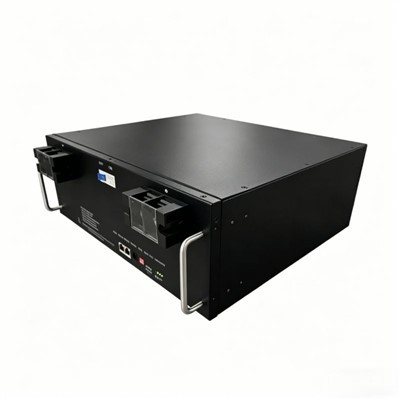
First, let’s cut through the noise: C&I ESS is way different from the little battery wall in your garage. These systems can hold 100kWh, 500kWh, even 2MWh of juice—enough to power an entire office building or keep a production line running during a grid outage. That size means the risks are bigger too: thermal runaway, short circuits, grid interconnection blunders, even fire hazards that can shut down an entire block. So every safety step we take starts with the “defense in depth” approach—meaning we don’t just rely on one thing to keep things safe, we layer protections so if one part fails, another takes over.
Let’s start with the battery module level, because that’s where the energy is stored. We use lithium iron phosphate (LFP) batteries for literally every C&I system we sell, not the old lithium-ion stuff that gets all the bad press for overheating. LFP is way more chemically stable—its structure won’t break down and catch fire even if it’s punctured or overcharged, which is a huge win for commercial settings where maintenance might be scheduled every 6 months, not every week. But even with LFP, we don’t skip the small stuff inside each module: every individual cell has a built-in circuit breaker that trips if it’s drawing too much current, a temperature sensor that alerts us if it’s running hot, and a pressure relief valve that vents any built-up gasses slowly instead of letting them burst. I’ve seen a competitor’s module that skipped the pressure valve, and it blew a seal during a heat test—we never want that happening on our watch.
Next up, battery packs. Each module plugs into a pack, and here’s where we add another layer of defense: active thermal management, not the passive kind you see in cheap systems. This is basically a mini HVAC system for the battery pack. We use liquid cooling (not air cooling, which lets dust build up and cause shorts) that keeps the entire pack’s temperature within 15°C of the ideal 25°C, even if the warehouse is 95°F in July or 30°F in January. But we don’t just use one temperature sensor—we have 12 per 100kWh pack, so if one is broken, the others still work. If the pack does get too hot, the thermal management system doesn’t just turn off—it triggers a series of alerts: first, it sends a push notification to our 24/7 monitoring team, then to the client’s facilities lead, then if it hits a critical threshold, it disconnects the pack from the rest of the system. Last year, we had a system in Dallas where the cooling line got clogged with construction dust—our sensors caught the temp spike before it even reached 40°C, we sent a local tech to clear it, and no one even noticed there was a hiccup. That’s the safety we’re after.
Now, let’s talk about the big brain of the whole system: the Battery Management System (BMS). This is the part that everyone talks about, but most companies skimp on. Our BMS isn’t just a basic controller—it’s a closed-loop, AI-powered system that talks to every component in real time. It checks each cell’s voltage, current, and temperature 10 times a second, not once a minute like some budget systems. The BMS does a few key safety things: first, it balances the cells so no one is overworked. If one cell is discharging faster than the others, it adjusts the flow to keep everything even, which prevents overcharging or overheating. Second, it stops any abnormal current flow instantly—if a wire gets nicked and starts shorting, the BMS trips the main disconnect in 2 milliseconds, faster than the human eye can blink. Third, it never lets the system pull more power than the battery or the electrical panel can handle. I’ve seen clients try to hook their ESS up to the grid to run their entire facility during a storm, and the BMS would shut it down if the grid was too unstable, because a bad voltage spike could fry the whole system. The BMS also has a grid interconnection safety feature that’s required by codes like NEC 706, but we go a step further: it completely disconnects the ESS from the grid within 6 cycles if there’s a grid outage, so lineworkers fixing power lines don’t get electrocuted from our batteries feeding back power. That’s a non-negotiable for us—we’ve had lineworker safety conversations with our clients before, and we never cut corners there.
Once we get past the battery and BMS, we move to the system level, where the ESS connects to the building’s electrical panel, solar panels, and the grid. This is where things like fire safety and physical access come in. First, all our ESS units are housed in NEMA 12 or NEMA 4 enclosures—meaning they’re dust-tight, water-resistant, and rated for indoor or outdoor use, so if you put them in a back warehouse or a shaded outdoor pad, they don’t get damaged by rain, snow, or dust. Inside each enclosure, we have a fire suppression system that’s not just a regular fire extinguisher. It’s a clean agent system that discharges a non-toxic gas (no harmful chemicals that would get into your warehouse air if it goes off) that smothers any thermal runaway before it can spread. We also put these units in dedicated, ventilated rooms if the client has space, or set up 1-hour fire-rated barriers around them if they have to put them near other equipment. I always tell clients: never put your ESS next to a pile of cardboard boxes or a flammable chemical storage area. We’ll help you design the layout so the ESS is in a low-risk spot, because we don’t want to be the reason your warehouse burns down.
Physical and cybersecurity safety are two areas that a lot of C&I folks forget about, but they’re huge. Physical: these systems hold hundreds of thousands of dollars’ worth of energy, so we lock the main enclosure with heavy-duty, tamper-proof locks, and we set up access codes that only your facilities lead and our support team can get. We also put tamper sensors on every door—if someone tries to pry it open, you’ll get an alert on your phone instantly. Cybersecurity is even more important these days, because ESS is connected to the internet for monitoring and control. We don’t use basic Wi-Fi that’s open to your whole network—we create a dedicated, encrypted private network for each ESS, so even if someone hacks into your office Wi-Fi, they can’t get to the ESS. Our BMS also gets automatic security updates every 2 weeks, so we patch any vulnerabilities before they can be exploited. Last year, a competitor had a client’s ESS hacked through their shared network, and it drained 80% of the battery overnight. That’s the kind of story that keeps me up at night, so we test our cybersecurity every quarter with third-party firms to make sure it’s solid.
Wait, let’s not forget about commissioning and training. A system is only as safe as the people installing and using it. We don’t just drop the ESS at your site and leave—our install team is factory-trained, licensed, and bonded, and they spend 2 days commissioning the system: running thermal tests, checking all connections, simulating grid outages, and making sure every sensor is calibrated. Then, we spend 4 hours training your team (we do live sessions or pre-recorded ones, whatever works for you) on the basics: how to check system alerts, what to do if a notification pops up, how to access the basic controls. We also give you 24/7 support—if your facilities lead gets a alert at 3 a.m., they can call our on-call tech, not a generic support line that takes 2 hours to answer. We’ve had clients who skipped training and tried to reset an alert on their own, and accidentally tripped the whole system. We never want that to happen to you, so we make sure your team knows exactly what they’re doing.
Now, I know what you’re thinking: “All this sounds great, but what about regulations and testing?” Let’s be clear: we don’t sell any system that hasn’t passed UL 9540 testing—the global standard for energy storage safety. UL 9540 tests for thermal runaway, fire spread, electrical faults, and grid compatibility, and every single one of our units gets a full third-party audit before it leaves our warehouse. We also comply with all local, state, and national codes, including NEC 706, NFPA 855, and any specific utility requirements in your area. I recently worked with a small business in Seattle that had to meet Washington state’s strict ESS codes, and we adjusted our system layout to fit their requirements, no extra cost. That’s the kind of flexibility we offer.
Let me wrap this up with a real example that sticks with me. A client in Detroit—they run a auto parts manufacturing plant, 80,000 sq ft, with old, unreliable grid power that would go out 10-15 times a year, costing them $12k per outage in lost production. They were nervous about ESS, because a similar plant nearby had a battery fire in 2021 that shut them down for 3 days. We installed our 1MWh C&I ESS system last year, walked their maintenance team through every safety feature, and monitored it remotely for the first 3 months. Last winter, a ice storm took down the grid for 12 hours. Their BMS kicked in instantly, switched over to battery power, and kept their assembly line running the whole time. No issues, no alerts, no evacs. The only call they made was to our team 2 hours later to say the system was working better than expected. That’s the safety we build for.
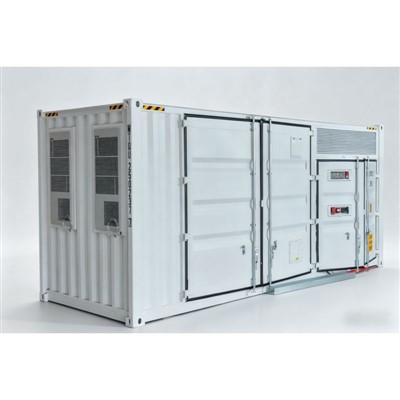
At the end of the day, C&I ESS is supposed to save you money on energy bills, protect your business from outages, and be a reliable part of your operations—all while keeping your team, your property, and the people around you safe. We don’t cut corners on safety, because our reputation isn’t just about selling batteries—it’s about making sure your business doesn’t have to worry about the things that could go wrong. If you’re thinking about adding a C&I ESS platform to your facility, or if you want to ask more specific questions about safety measures for your exact space, feel free to reach out to our team to set up a consultation. We’ll come to your site, walk through your needs, and show you exactly how our safety features will work for you.
Home Battery References:
- National Electrical Manufacturers Association (NEMA). NEMA Enclosure Types for Electrical Equipment.
- Underwriters Laboratories (UL). UL 9540: Standard for Energy Storage Systems and Equipment.
- National Fire Protection Association (NFPA). NFPA 855: Standard for the Installation of Stationary Energy Storage Systems.
- National Electrical Code (NEC). Article 706: Energy Storage Systems.
- U.S. Department of Energy (DOE). Commercial & Industrial Energy Storage Safety Best Practices.
Tianjin Xilingke New Energy Technology Co., Ltd.
Address: Suite 2601, Tower B, Wanghai International, Haihe East Road, Hebei District, Tianjin, China.
E-mail: robin@sinelinkev.com
WebSite: https://www.sinelinkenergy.com/
