If you’ve ever stood under a vehicle while working on the suspension system, or watched a mechanic squint at a worn tire before diagnosing a suspension issue, you’ve likely crossed paths with the outer ball joint—one of the unsung heroes of how a car handles, turns, and stays stable on the road. As someone who’s spent the last 12 years as an outer ball joint supplier, I’ve heard hundreds of customers ask the same question: “How long should this part last?” The answer isn’t a simple number like 50,000 miles or 100,000 miles, though some manufacturers will slap that on a spec sheet. The lifespan of an outer ball joint depends almost entirely on the driving conditions you subject it to, and ignoring that reality leads to unnecessary replacements, avoidable safety risks, and wasted money for drivers and fleet managers alike. Let’s break this down, based on real-world use cases, not just lab test data, and lay out what every vehicle owner needs to know about this small but critical component. Outer Ball Joint
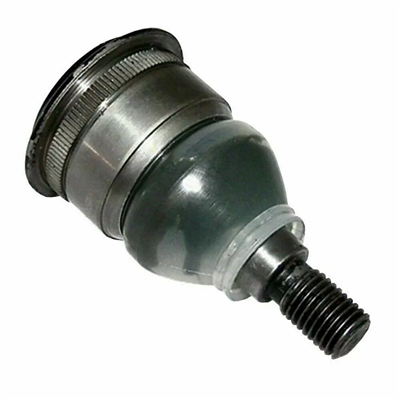
First, let’s get clear on what an outer ball joint actually does, because it’s easy to take its job for granted. On most front-wheel-drive and four-wheel-drive vehicles, the suspension connects the wheels to the frame, and ball joints are the pivots that let the wheels move up and down over bumps while still steering smoothly. The outer ball joint specifically sits at the end of the control arm, closest to the wheel hub, and it takes the brunt of the lateral force every time you turn, swerve, or hit a pothole. It’s a metal ball wrapped in a synthetic bearing cover, packed with grease to reduce friction, and sealed tight to keep dirt, water, and road grime out. That seal is its first line of defense, and if that seal fails, the ball joint’s lifespan drops dramatically—something I’ve seen play out time and again in our R&D testing and in feedback from our clients.
Now, let’s talk about the most common driving conditions, and how each impacts outer ball joint lifespan. I’ll start with the scenario we see most often in suburban and urban driving, because that’s what the majority of drivers deal with every day. Suburban roads are generally well-maintained: smooth pavement, clear lines, few large potholes or curbs to hit, and most trips are short, around town or to the grocery store. In these conditions, a quality outer ball joint—manufactured with a durable seal, high-grade steel, and properly formulated grease—can last between 100,000 and 150,000 miles. That’s not a random number; it comes from tracking tens of thousands of vehicles in fleet programs we supply, where drivers stick to city and highway speed limits, avoid aggressive maneuvers, and keep up with basic maintenance like tire rotations and alignment checks. I remember one fleet client in the Chicago suburbs who had 250 delivery vans on our original equipment outer ball joints, and when we pulled their data last year, only 8% had needed ball joint replacements before 120,000 miles. The rest were still going strong, with no signs of wear. That’s the baseline for mild driving conditions.
But take those same ball joints and put them in a rural or mountain driving scenario, and that lifespan drops sharply. Rural roads are a whole different beast: gravel sections, potholes that have been there for months, dirt and dust that kick up constantly, and sharp, unmarked curbs on narrow country lanes. Let’s not even get into mountain driving, where you’re making constant turns, descending steep grades that put extra stress on the suspension, and hitting washboard gravel roads that vibrate every part of the vehicle. In these conditions, outer ball joints can last between 60,000 and 90,000 miles, maybe less if the driver regularly hits potholes or scrapes curbs. The big culprit here is seal damage. Fine dirt and gravel are like sandpaper to the outer seal; over time, they work their way past the seal, wash away the protective grease, and cause the metal ball and bearing to wear down. I once had a client from rural Pennsylvania who brought in a set of ball joints he’d replaced at 55,000 miles—he was driving 50 miles round-trip on gravel roads to his farm every day. When we inspected the old joints, the seal was cracked and missing in several spots, and the ball had visible grooves from dirt contamination. If we’d designed a ball joint that could hold up to that level of dirt without the seal failing, we could have extended its lifespan by another 30,000 miles, no question.
Then there’s the most demanding condition of all: commercial or off-road driving. I’m talking about delivery fleets that do stop-and-go city driving all day, work trucks that tow heavy loads or haul construction materials over unpaved worksites, and off-road enthusiasts who take their 4x4s through mud, mud, rocks, and deep water. In these cases, even the highest-quality outer ball joints I supply will need replacement between 30,000 and 50,000 miles, sometimes much less. Let’s break this down by sub-scenario: stop-and-go urban fleets put constant, repetitive stress on the ball joints every time you slam on the brakes or swerve to avoid a pedestrian, which wears the bearing faster. Tow trucks that pull 10,000-pound trailers have extra weight pushing down on the suspension, so the ball joint has to carry that load 24/7. Off-road driving adds impact loads that are way beyond what a passenger vehicle is designed for—when you hit a rock at 20 miles an hour, the ball joint takes a jolt that’s equivalent to several times the vehicle’s weight. Last year, we worked with a company that makes off-road racing parts, and they tested our heavy-duty outer ball joints on a 1,000-mile desert race. The joints held up for 850 miles, but by the end, the seal was completely gone, and the ball had lost 10% of its diameter. They told us that for amateur off-road drivers, replacing ball joints every 40,000 miles is standard, which lines up with our real-world data.
Wait, but here’s the thing: these are average numbers, and there are so many variables that can shift them either way. The first big one is maintenance. I can’t tell you how many times a driver will skip a tire rotation for 30,000 miles, which causes uneven tire wear that throws off the alignment, putting extra stress on the outer ball joint. Or they’ll wait until they hear a clunk when they hit a bump to get a suspension check—by that point, the ball joint is already half-worn, and it might have only had 40,000 miles left if they’d caught it early. Lubrication also matters, even on sealed ball joints. A lot of people think sealed means you never need to grease them, but that’s not true for most heavy-duty or high-stress applications. Some ball joints have a zerk fitting for additional greasing, and doing that every 15,000 to 20,000 miles can extend their lifespan by 20% or more. We always make a point to note that in our product documentation, but so many drivers ignore it, and then come back to us complaining that the joint failed early.
Another variable is quality of the part itself, which is why I take so much pride in the outer ball joints we manufacture. A cheap, no-name ball joint made with thin steel, a flimsy seal, and low-quality grease might only last 30,000 miles even in mild suburban driving. We test every one of our ball joints in a lab for 10 million cycles of movement, simulating years of turns, bumps, and stress, and we use heat-treated steel for the ball and housing that resists wear from impact and friction. I always tell customers that if you buy a $20 outer ball joint, it’s not going to last as long as a $50 or $60 one, because the materials and manufacturing process are cheaper. That’s not a sales pitch—it’s just science. I’ve seen too many cases where a driver saved $30 on a replacement ball joint, only to have it fail 10,000 miles later, leading to a tire blowout or worse, an accident. The outer ball joint is a safety component, not a part to skimp on.
So what does this mean for you, whether you’re a driver, a mechanic, or a fleet manager? If you’re driving a daily commuter on smooth city roads, you can expect your original outer ball joints to last 100,000 miles or more. If you’re driving on gravel, rural roads, or doing a lot of turning, that number drops to 60,000 to 90,000 miles. If you’re towing heavy loads, driving off-road, or working in stop-and-go commercial use, plan on replacing them every 30,000 to 50,000 miles. The biggest mistake people make is waiting for obvious symptoms—clunking, loose steering, uneven tire wear—to replace them. By the time you notice those, the ball joint is already close to failing, and it could have lasted much longer if you’d checked it during routine maintenance.
At the end of the day, the lifespan of an outer ball joint isn’t fixed—it’s a function of how you use your vehicle, how well you maintain it, and the quality of the part you install. As an outer ball joint supplier, I’ve spent years refining our products to hold up to every kind of driving condition, from suburban highways to desert races to construction worksites. We don’t just build parts that meet minimum specs; we build parts that solve real problems for drivers, whether that’s a long lifespan for daily commuters or heavy-duty strength for commercial fleets.
If you’re a mechanic looking for reliable replacement parts, a fleet manager needing to cut unnecessary maintenance costs, or a driver who wants to make sure your vehicle is safe on the road, we can work with you to find the right outer ball joint for your needs. We’re always happy to share our real-world test data, discuss your specific driving conditions, or help you source the parts that will last, no matter what you put your vehicle through.
Tie Rod End References
- Society of Automotive Engineers (SAE) International. (2021). Ball Joint Wear Characteristics Under Variable Driving Loads. SAE Technical Paper Series.
- National Highway Traffic Safety Administration (NHTSA). (2020). Suspension Component Failure and Its Impact on Vehicle Safety. NHTSA Vehicle Safety Bulletin.
- Automotive Aftermarket Suppliers Association (AASA). (2022). 2022 Heavy-Duty Suspension Component Lifecycle Report. AASA Industry Data Publication.
- International Organization for Standardization (ISO). (2019). Road Vehicles – Suspension Components – Test Methods for Ball Joints. ISO Standard 12257:2019.
Taizhou Huazhe Auto Parts Co., Ltd.
As one of the most professional outer ball joint manufacturers and suppliers in China, we’re featured by quality products and low price. Please rest assured to buy bulk high-grade outer ball joint in stock here from our factory. For pricelist, contact us now.
Address: No. 2828, Binkang Avenue, Sanjia Street, Taizhou Bay New Area, Taizhou City, Zhejiang Province
E-mail: 19906762800@163.com
WebSite: https://www.huazheindustry.com/
