Hey there, fellow industry enthusiasts! I’m a supplier of Radiator Fin Forming Machines, and today, I’m diving deep into the topic of fin forming error analysis for these machines. Why is this important? Well, understanding the errors in fin forming can help us improve the quality of the radiators we produce, save costs, and boost overall efficiency. So, let’s get started! Radiator Fin Forming Machine

Common Fin Forming Errors
First off, let’s talk about the common fin forming errors that we often come across. One of the most prevalent issues is the inconsistent fin height. You know, when you expect all the fins to be of the same height, but some are taller or shorter than others. This can happen due to a few reasons. Maybe the material feeding system is not working properly, causing uneven amounts of material to be used for each fin. Or, it could be that the forming tools are worn out, which leads to inconsistent shaping.
Another error is the incorrect fin pitch. The fin pitch is the distance between adjacent fins, and it’s crucial for the proper functioning of the radiator. If the pitch is too wide or too narrow, it can affect the heat transfer efficiency. This error can be caused by problems with the pitch adjustment mechanism on the machine. For example, if the gears or belts that control the pitch are loose or damaged, the fin pitch will be off.
Fin distortion is also a major headache. You’ll notice that the fins are bent or twisted instead of being straight and uniform. This can occur during the forming process if the material is not properly supported or if there’s too much stress applied. Sometimes, it’s also because the material has some internal stresses of its own, which are released during forming and cause the distortion.
Causes of These Errors
Let’s dig a little deeper into the causes of these errors. Starting with the inconsistent fin height, as I mentioned earlier, the material feeding system is often to blame. In a Radiator Fin Forming Machine, the material reel needs to unwind smoothly and at a constant speed. If there are any kinks or knots in the material, it can disrupt the feeding process. Also, the tension control of the material is crucial. If the tension is too high or too low, it can lead to uneven material flow and ultimately, inconsistent fin height.
The forming tools play a huge role as well. Over time, these tools can wear out due to repeated use. The cutting edges can become dull, and the shaping surfaces can get damaged. When this happens, the machine won’t be able to form the fins accurately. For instance, a dull cutting edge might not cut through the material cleanly, causing the fin to have an irregular shape or height.
As for the incorrect fin pitch, it’s mostly about the mechanical components of the machine. The pitch adjustment mechanism relies on precise movements and alignments. If the gears are misaligned or the belts are slipping, the pitch will change unexpectedly. Sometimes, it can also be a software issue. If the control system that commands the pitch adjustment is miscalibrated or has a glitch, the fin pitch won’t be set correctly.
Fin distortion can be caused by a combination of factors. The type of material used is an important one. Some materials are more prone to distortion than others, especially if they have a low yield strength. During the forming process, if the material is not properly clamped or guided, it can easily bend or twist. Additionally, the temperature during forming can also affect distortion. If the machine operates at too high a temperature, the material may become softer and more likely to deform.
Impact of These Errors
The errors in fin forming can have a significant impact on the performance of the radiators. When the fin height is inconsistent, it can lead to uneven airflow across the radiator. This means that some parts of the radiator will be less effective at dissipating heat, reducing the overall heat transfer efficiency. The radiator may not be able to cool the system as well as it should, which can cause overheating issues in the equipment it’s installed in.
An incorrect fin pitch can also mess up the airflow. If the pitch is too wide, the air may pass through the radiator too quickly, without enough time to transfer heat from the fins. On the other hand, if the pitch is too narrow, the air may have a hard time passing through, creating a high-pressure drop. This not only reduces the heat transfer efficiency but also increases the energy consumption of the fan that blows air through the radiator.
Fin distortion can cause similar problems. Bent or twisted fins can disrupt the airflow pattern, making it less efficient. It can also lead to increased noise levels as the air flows around the deformed fins. Moreover, distorted fins are more likely to accumulate dust and debris, which can further reduce the radiator’s performance over time.
How to Analyze and Solve These Errors
So, how do we analyze and solve these fin forming errors? First, we need to do a thorough inspection of the machine. We should check the material feeding system for any signs of blockages or irregularities. Make sure the material reel is rotating smoothly and the tension is consistent. If there are any kinks or knots in the material, we need to remove them before starting the forming process.
Next, we need to examine the forming tools. If they are worn out, we should replace them immediately. Regular maintenance of the tools, such as sharpening the cutting edges and polishing the shaping surfaces, can also help prevent errors. We can also use some non – destructive testing methods to check the integrity of the tools, like ultrasonic testing to detect any hidden cracks.
For the pitch adjustment mechanism, we should check the mechanical components for proper alignment and tightness. If the gears or belts are loose, we need to tighten or replace them. We can also recalibrate the control system to ensure accurate pitch adjustment. And don’t forget to clean the components regularly to prevent any dirt or debris from affecting their performance.
To deal with fin distortion, we need to choose the right material. If a certain material is causing too much distortion, we can try a different one with better formability. We also need to optimize the forming process parameters, such as the clamping force and the forming speed. By adjusting these parameters, we can reduce the stress on the material and minimize distortion.
Conclusion
In conclusion, understanding the fin forming error analysis of a Radiator Fin Forming Machine is crucial for producing high – quality radiators. By being aware of the common errors, their causes, and their impacts, we can take the necessary steps to prevent and correct them. This not only improves the performance of the radiators but also saves us time and money in the long run.
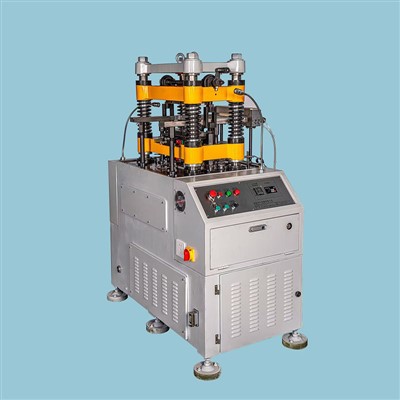
If you’re in the market for a reliable Radiator Fin Forming Machine or want to discuss any issues related to fin forming, don’t hesitate to reach out. We’re here to help you get the best solutions for your specific needs. Feel free to contact us for more information and to start a procurement discussion.
Automatic Feeding Machine References
- "Manufacturing Technology of Heat Exchangers" by John Doe
- "Advanced Forming Processes for Industrial Components" by Jane Smith
Suichang Lvye Machinery Co., Ltd.
We are one of the most professional radiator fin forming machine manufacturers in China, also support customized service with low price. We warmly welcome you to buy discount radiator fin forming machine for sale here from our factory. If you have any enquiry about quotation, please feel free to email us.
Address: No. 402, Mudanting East Road, Miaogao Street, Suichang County, Lishui City, Zhejiang Province
E-mail: L528753@outlook.com
WebSite: https://www.suichanglvye.com/
